Winterizing a travel trailer: build the right checklist
Turn the manuals for your installed equipment into a coordinated storage plan.
Specs and limits
Winterization depends on the actual plumbing, appliances, climate, and storage plan. Build the checklist from the RV and component manuals. This is a coordination guide, not a universal drain, bypass, compressed-air, antifreeze, gas, or electrical procedure.
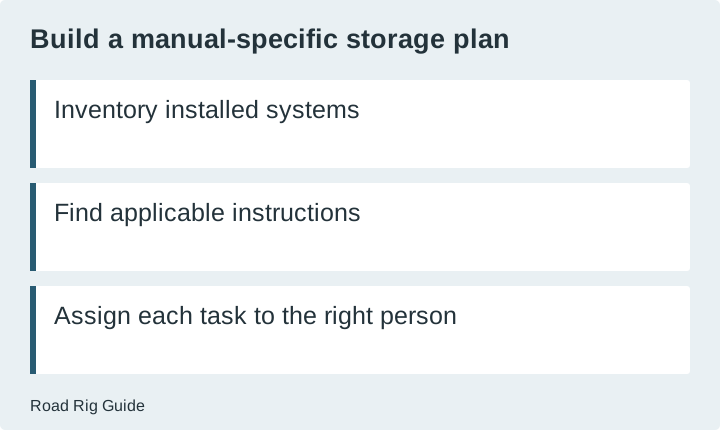
The first winterization task is not opening a valve. It is identifying every installed system that needs attention and finding the instructions that apply to it. A generic checklist can miss an added appliance or describe equipment your trailer does not have. Start with an inventory, then turn the correct manuals into a work plan.
The aim is a documented storage condition you can later reverse correctly. That means recording what was done, what method was used, what remains unresolved, and what must happen before the RV returns to service. “Winterized” without those details is a label that may conceal important uncertainty.
Define the storage situation
Write down where the trailer will be kept, whether it will be occupied, what utilities will remain available, and who will check it. Use the actual expected conditions rather than assuming a calendar date alone determines the work. A short pause between trips and a long unattended storage period may require different planning.
Identify which tasks you are competent and equipped to perform under the manuals. Arrange qualified service for the rest. Do not let a checklist create pressure to perform unfamiliar plumbing, gas, electrical, or brake work. The plan is complete when each task has an appropriate owner, not when every task is assigned to you.
Keep the storage provider’s instructions and restrictions with the equipment plan. Access, utility availability, and permitted work may affect how you arrange service. Confirm those details before arriving with a trailer that still needs preparation.
Inventory the systems, including additions
List the installed water heater, pump, filters, fixtures, toilet, exterior water points, and any optional water-connected equipment. Include modifications made after manufacture. Record model identifiers and find the correct component instructions where the RV manual directs you to them.
The Jayco towable manual contains equipment-dependent winterization sections, illustrating why a single method should not be generalized across all trailers. Use the sections that actually match the installed system and resolve conflicts with the manufacturer or service provider.
Do not assume that a component hidden from ordinary view can be omitted. Equally, do not dismantle equipment to identify it without appropriate instructions. Service records, model documentation, and qualified inspection can help establish the inventory safely.
Turn manuals into a task register
| Task area | Record before work | Record after work | | --- | --- | --- | | Plumbing system | Exact manual and chosen approved method | Method completed, date and responsible person | | Water-connected appliances | Model-specific requirements | Each applicable item accounted for | | Battery and charging | Actual battery and equipment guidance | Confirmed storage arrangement | | Exterior and openings | Inspection scope and unresolved concerns | Findings and any completed service | | Tires and running gear | Manufacturer storage/service requirements | Verified plan and follow-up needs | | Return to use | Required reversal and inspection steps | Keep pending until recommissioning |
This original register is intentionally not a valve-by-valve checklist. It makes the required evidence and handoffs visible. Add the exact steps from the applicable manuals to your private work plan without assuming another rig’s sequence applies.
Coordinate seasonal work with maintenance
Airstream’s off-season guidance treats storage preparation and maintenance as related planning concerns. Use that as a reminder to review due work, not as permission to copy instructions intended for a different vehicle or component.
Check whether scheduled inspections or service are due before storage, during the storage period, or before the next trip. Keep completed work separate from work merely booked. A future appointment does not establish that the trailer has already reached the intended storage condition.
If the service provider identifies damage or uncertainty, record the finding and the next action. Do not hide unresolved work under a general winterization invoice. Ask what the service included and what it excluded so the final record accurately describes the trailer.
Avoid mixing incompatible procedures
Different equipment and approved methods may use different sequences and materials. Do not combine selected steps from several online checklists because each sounds familiar. The resulting hybrid may omit a required action or expose equipment to something its manufacturer does not permit.
When the RV manual refers to a component manual, obtain that manual and check the exact model. If instructions appear to conflict, seek clarification before proceeding. Record the resolution rather than choosing whichever procedure is shorter.
This article supplies no universal air pressure, fluid quantity, bypass position, or chemical specification. Those details are equipment-dependent. Their absence is deliberate: a generic number could create false confidence while being wrong for the installed system.
Document the actual handoff
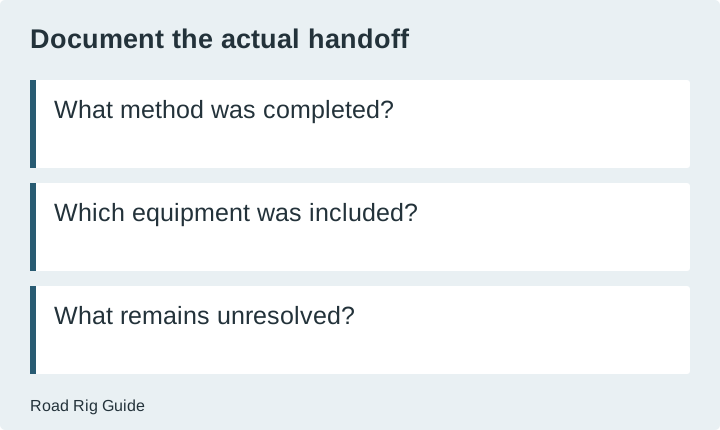
If a provider performs the work, ask for a record of the scope and any relevant method details needed for later return to service. Identify whether optional or owner-added equipment was included. Give the provider the inventory so neither party assumes the other has accounted for it.
If you perform an authorized owner task yourself, record the same information. A dated checklist with the correct manual reference is more useful than relying on memory months later. Mark anything not completed and explain why.
Keep labels or reminders only where they are appropriate and do not interfere with equipment. The purpose is to prevent accidental use in a storage state and to make recommissioning clear. Follow the manufacturer’s instructions for any required notices or disabled systems.
Plan periodic checks without inventing a schedule
Determine the inspection cadence from the equipment guidance, storage arrangement, and responsible provider. Do not assume every stored trailer needs the same interval or that a particular storage facility monitors the rig for you. Confirm who is responsible for observing problems and arranging action.
Keep a simple record of each check and what changed. If a concern is found, describe it without attempting an unsupported diagnosis. Arrange the appropriate service rather than waiting for the next departure date to discover whether the issue matters.
A storage plan also needs a contact and access arrangement. If someone else must move or service the trailer, ensure the relevant instructions and authorization are clear. This is operational planning, not a recommendation to leave sensitive keys or personal information in an unsecured location.
Budget the defined work
Request a quote for the actual scope, including optional equipment and any separate inspection or return-to-service work. Do not compare two prices until you know whether they cover the same tasks. Keep corrective repairs separate from routine seasonal preparation.
Use your annual operating-cost ledger to track these amounts. The trip-budget tool can account for a user-entered service amount as an extra when it belongs to a specific trip, but it does not estimate winterization prices. No national cost range is asserted here.
Make return to service part of the plan
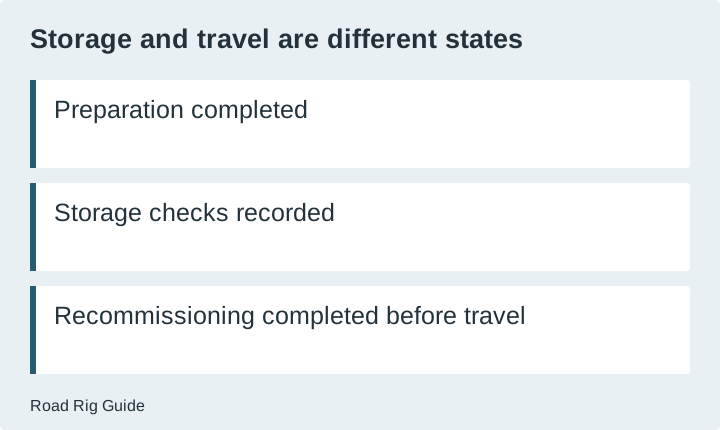
Before the next trip, use the correct recommissioning instructions and arrange any required inspections. The winterization record should make it clear what must be reversed or checked. Do not assume that reconnecting a utility restores every system to a ready condition.
Finish with a separate departure check after recommissioning is complete. A trailer prepared for storage and a trailer prepared for travel are different states. Keeping both documented is the practical value of a manual-specific winterization plan.
Sources
- Jayco 2026 family towable owner manual
Accessed 2026-11-20. Check the source for equipment-specific instructions and current policies. - Airstream: guide to the off-season
Accessed 2026-11-20. Check the source for equipment-specific instructions and current policies.