Propane, butane or liquid fuel for a camp stove?
Choose a compatible stove-and-fuel system for the meals and conditions you expect.
Specs and limits
The exact stove manual determines approved fuel, containers, connections, and operating conditions. Fuel-family names do not establish compatibility. This is a buying comparison, not a stove test, connection procedure, or fuel-substitution guide.
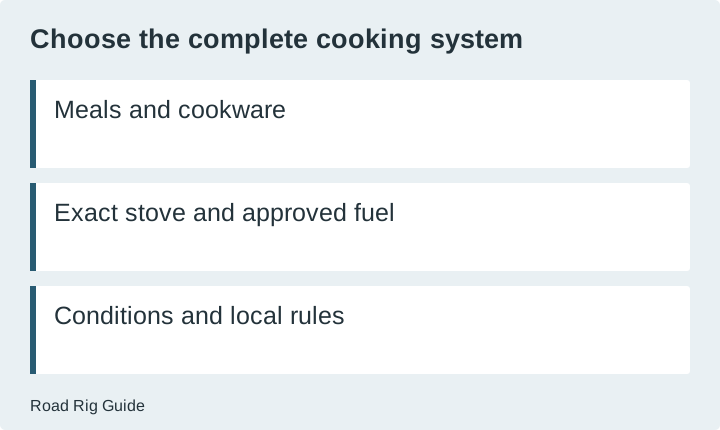
Choose the meal before choosing the fuel. Boiling water for a simple breakfast, preparing two dishes at once, and simmering a large pan are different jobs. A stove that suits one can be frustrating for another even if the fuel is easy to find. Start with the cooking routine, then match the complete stove-and-fuel system to it.
The useful comparison is between actual products operated as their manufacturers intend. Do not decide that two canisters are interchangeable because they contain related fuels or appear to have similar fittings. No adapter, refill method, pressure modification, or improvised connection is recommended here.
Make a cooking task list
Write down the meals you genuinely expect to cook and the cookware required. Identify whether dishes need simultaneous heat or can be prepared in sequence. Note the space needed for the pots and a stable, permitted cooking location. These requirements help narrow the stove design before fuel convenience becomes the deciding factor.
Think about the time available at each stop. A setup that is pleasant during a long stay may be inconvenient for a short lunch break. Include packing and cleanup in the comparison, not just the time until food is ready. Ask to see how the actual product packs away and how its components are protected during transport.
Keep the comparison realistic. You do not need equipment for every imaginable meal if your normal trip uses a small, repeatable menu. Conversely, a minimalist system may be a poor fit when your household routinely cooks larger meals. Match the equipment to the work rather than treating compactness as a goal by itself.
Understand the fuel labels carefully
MSR’s explanation of IsoPro fuels distinguishes propane, isobutane, and normal butane and explains why vapor pressure matters in cold conditions. The relevant lesson for a buyer is to identify the actual fuel formulation and the stove’s specified use conditions. “Gas canister” is not a complete specification.
Jetboil’s fuel guide discusses fuel choices and the need to check local stove restrictions. Treat such a guide as background. The model’s operating manual remains the place to confirm which fuel and container are approved for that stove.
Liquid-fuel products also need exact identification. Do not treat “multi-fuel” as permission to burn any liquid that is available. Record the approved fuels from the actual manual and the required original equipment. If the instructions are missing or ambiguous, resolve that question with the manufacturer before choosing the product.
Compare complete systems
| Comparison | Propane system | Butane or blended-canister system | Liquid-fuel system | | --- | --- | --- | --- | | Compatibility evidence | Exact stove and approved supply | Exact formulation, canister and stove | Exact approved fuel and equipment | | Cooking fit | Check burners, pot support and control | Check cookware and control | Check cookware and control | | Conditions | Use the model’s stated limits | Check formulation and model limits | Use the model’s stated limits | | Trip logistics | Verify supply and permitted storage | Verify the correct canister is available | Verify the approved fuel is available | | Maintenance | Read the model’s schedule | Read the model’s schedule | Read the model’s schedule | | Local restrictions | Verify current rules | Verify current rules | Verify current rules |
The table does not assign a winner or a universal operating temperature. Those answers depend on the actual system and conditions. It is an original checklist for comparing evidence, not a summary of performance tests.
Check availability before the trip
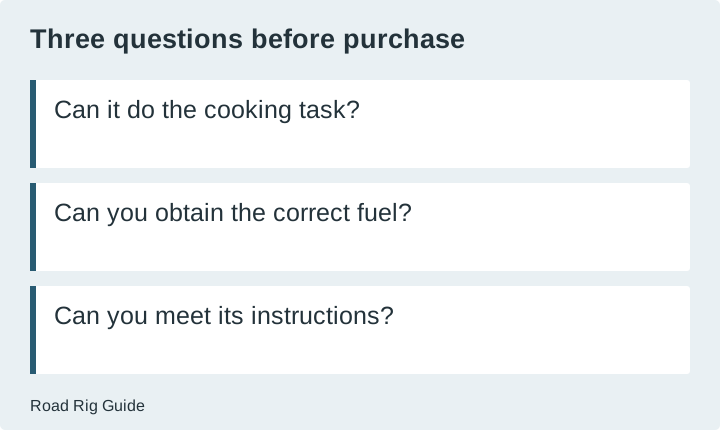
Search for the approved fuel at the places where you expect to resupply, then verify current availability through the retailer or operator. A common fuel in one area may not be easy to obtain along your specific route. Product-family familiarity is not enough if the stove requires a particular container or formulation.
Plan quantities using documented consumption or your own comparable records. Keep cooking time and the number of users visible. A manufacturer’s boil test, if provided, describes its stated conditions; it should not quietly become a guarantee for all meals, wind conditions, or cookware.
Record a fallback meal plan that does not depend on making an unsafe substitution. If the correct fuel is unavailable, the answer is not to improvise a connection or use an unapproved fuel. A simpler meal or another permitted cooking option can be a more practical contingency.
Separate runtime from performance
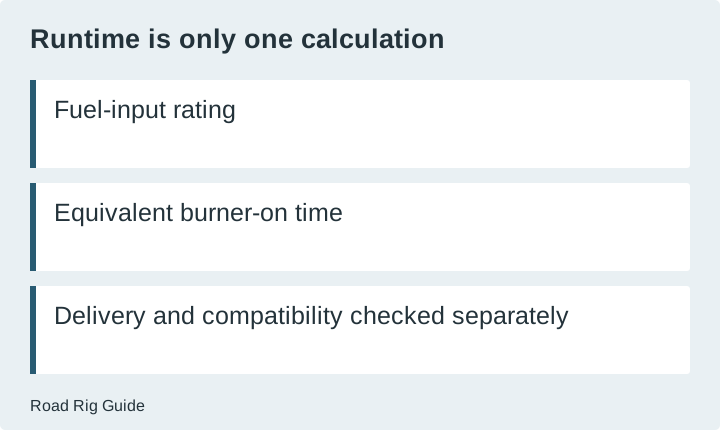
For a propane appliance with a documented fuel-input rating, the propane worksheet can estimate energy use from burner-on hours. It does not evaluate pressure, regulator capacity, vaporization, or whether the container can supply the appliance under the expected conditions.
For example, an illustrative input of 10,000 BTU per hour used for half an hour consumes 5,000 BTU in the simple model. That arithmetic does not tell you how many meals it cooks. Meal size, heating level, cookware, and operating conditions still matter. The example is a unit demonstration, not a product rating.
Do not use a propane-only energy constant for a mixed-fuel canister and claim an exact result. Keep the fuel composition and the manufacturer’s consumption method consistent. If the information is insufficient, retain a range of clearly labeled planning assumptions or obtain better product data.
Review the practical handling requirements
Read the manufacturer’s storage, transport, inspection, and operating instructions before purchase. Decide whether you can follow them in your actual vehicle and camping routine. A compact product is not a good fit if its safe storage or use requirements cannot be met.
This guide does not authorize use inside a vehicle, tent, or other enclosed space. Follow the exact appliance instructions and current campsite rules. Do not add a windscreen, hose, adapter, or other accessory unless it is approved for the complete setup. An accessory that works on another stove is not evidence of compatibility.
If equipment is damaged, leaking, or behaving abnormally, stop and follow the manufacturer’s safety guidance. A buying guide cannot diagnose the problem. Arrange qualified assistance rather than experimenting with fuel, pressure, or connections to recover performance.
Choose from a short, documented shortlist
For each candidate, keep the manual, approved fuel information, cooking-task notes, and resupply plan together. Mark any unresolved issue clearly. Compare the total kit you actually need, including approved accessories and suitable storage, rather than just the stove body.
The strongest choice is the system whose limitations you understand and can accommodate. It should perform the cooking tasks you expect, use a fuel you can obtain and store appropriately, and fit the rules where you intend to camp. No claim of firsthand testing is needed to make that comparison useful; clear evidence and an honest scope are enough to narrow the decision.
Sources
- MSR / Cascade Designs: IsoPro fuel composition
Accessed 2026-11-20. Check the source for equipment-specific instructions and current policies. - Jetboil: camp stove fuel guide
Accessed 2026-11-20. Check the source for equipment-specific instructions and current policies.